
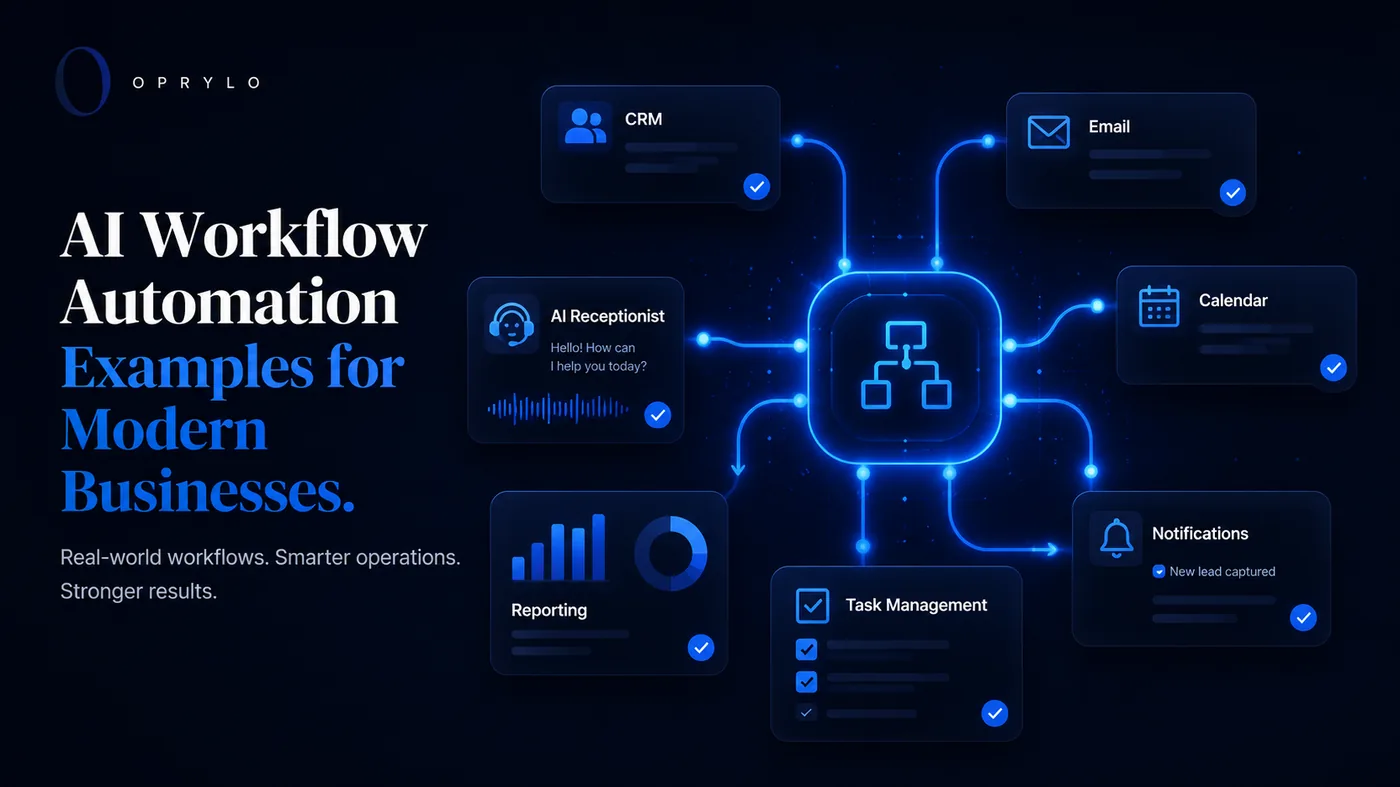
What counts as an AI workflow
An AI workflow is any repeatable process where AI handles at least one step that used to require a person, reading a message, replying, tagging a record, deciding what happens next. In modern businesses, these workflows usually connect a few tools together: a form, a CRM, an inbox, a calendar, and a messaging channel.
The examples below are the ones we see most often at Oprylo. None of them require rebuilding your stack, they layer on top of the tools you already use.
1. Lead capture and instant follow-up
A visitor fills out a form, books a call, or messages you on Instagram. Instead of waiting for someone on your team to notice, an AI workflow replies in seconds with a personalized message, asks a few qualifying questions, and creates a fully tagged record in your CRM.
This is the core of a Lead Flow System. Response time is the single biggest driver of whether a lead converts, and lead follow-up automation is where most businesses see results first.
2. AI receptionist for calls and messages
An AI receptionist answers common questions, takes messages, qualifies inquiries, and books appointments, 24/7. Instead of missing calls or sending everything to voicemail, the receptionist handles routine intake and escalates real opportunities to your team with full context.
This is customer intake automation in its most direct form: fewer missed conversations, faster answers, and a consistent first impression on every channel.
3. CRM automation and pipeline hygiene
A well-run CRM is powerful. A messy CRM slows everyone down. CRM automation keeps records clean automatically:
- New leads are created and tagged the moment they come in
- Deals move through pipeline stages based on real activity
- Stale opportunities get flagged instead of forgotten
- Data is synced across CRM, billing, and support tools
4. Multi-step follow-up sequences
One reply is rarely enough. AI workflows run polite, timed follow-up sequences across email and SMS, pausing when a lead replies, resuming when they go quiet, and re-engaging cold contacts weeks later. Your team stops chasing; the workflow handles the reminders.
5. Meeting summaries and CRM notes
After a sales or discovery call, AI can summarize the transcript, extract action items, and drop clean notes directly onto the CRM record, no more copy-paste from a doc. Your pipeline becomes an actual record of what was discussed, not just what was clicked.
6. Internal reporting and weekly rollups
Instead of building the same weekly report by hand, an AI workflow pulls the numbers, writes a short narrative, and drops it into Slack or email every Monday morning. Leaders get a consistent view of leads, revenue, and pipeline without asking.
7. Document and admin task automation
Quotes, contracts, onboarding checklists, invoice reminders , these are the workflows that quietly eat hours every week. AI can draft the first version, fill in fields from your CRM, route for approval, and send it out. This is where business process automation turns into real time saved.
How these examples fit together
The workflows above aren't separate products, they're modules of the same system. An AI automation agency like Oprylo maps them to your actual business during a free automation audit, then builds only the ones that will move the needle.
Many businesses start with a Starter Automation for their biggest single bottleneck, then expand into the full Workflow Growth package once they see the impact.
Pick your first workflow
The best first workflow is the one that costs you the most time or the most missed revenue right now. If you're not sure which that is, that's exactly what the audit is for. See our packages or get in touch to talk through your setup.