
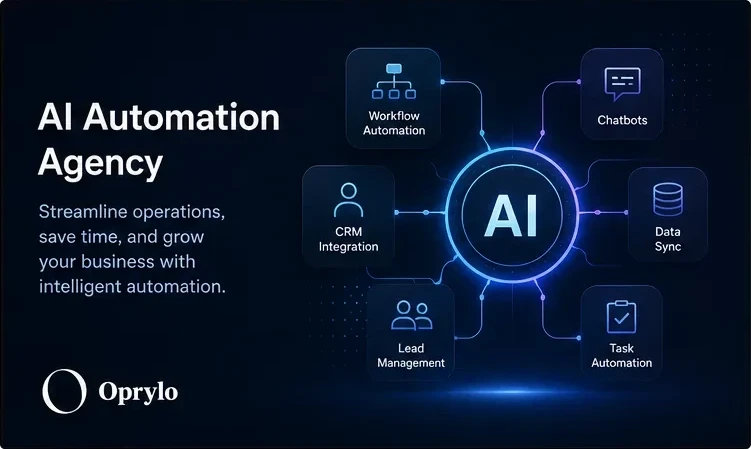
What an AI automation agency really does
The term AI automation agency can sound broad, but the work is very concrete. An AI automation agency looks at how a business runs day-to-day, identifies the tasks that eat up time without adding much value, and builds AI-powered workflows to handle them automatically.
That usually means connecting existing tools, CRM, email, calendar, forms, spreadsheets, and messaging apps, into workflows that move information around, respond to customers, and keep records updated without anyone copying and pasting.
Common problems it solves
- Leads slipping through the cracks because follow-up isn't consistent
- Customer intake done manually across email, forms, and DMs
- Data re-entered between CRM, spreadsheets, and billing tools
- Owners and managers spending hours on reporting and admin
- Inbox chaos and slow responses to common customer questions
Examples of AI workflow automation
A few grounded examples of what AI workflow automation can look like in practice:
- New lead submits a form → CRM record is created, tagged, and an AI-personalized follow-up email is sent within seconds.
- A returning customer asks a common question → an AI assistant answers instantly and books them straight into a calendar.
- A deal is marked ‘won' in the CRM → the client is onboarded, tasks are created, and a welcome sequence starts automatically.
- Every Monday → a weekly summary of leads, deals, and open tasks lands in the owner's inbox automatically.
How Oprylo approaches AI automation
Oprylo builds practical automation systems, not experiments. Every engagement starts with a free automation audit where we map your current tools and workflows, then recommend 3–5 high-impact automations you can actually use.
From there, you can start small with a Starter Automation or scale into a connected system like the Workflow Growth package. If you're focused on sales, the Lead Flow System adds CRM automation and lead follow-up automation on top.
Is an AI automation agency right for you?
If your team spends real time each week on repetitive tasks, follow-ups, data entry, or coordinating between tools, then yes , there's almost always meaningful automation to unlock. The goal isn't to remove people from the process, it's to remove the busywork so people can focus on what actually needs a human.
If you're curious what this could look like for your business, the fastest way to find out is to book a free automation audit or reach out through the contact page.