
Start with the problem, not the tool
The biggest mistake buyers make is starting with the technology. "We want AI." "We want an AI receptionist." "We want to use n8n." Those are answers, not problems.
A good AI automation service starts by understanding what's actually costing you time or revenue, slow lead follow-up, missed calls, messy CRM, admin overload, and then chooses the right combination of tools. If the first conversation is about their stack instead of your business, that's a signal.
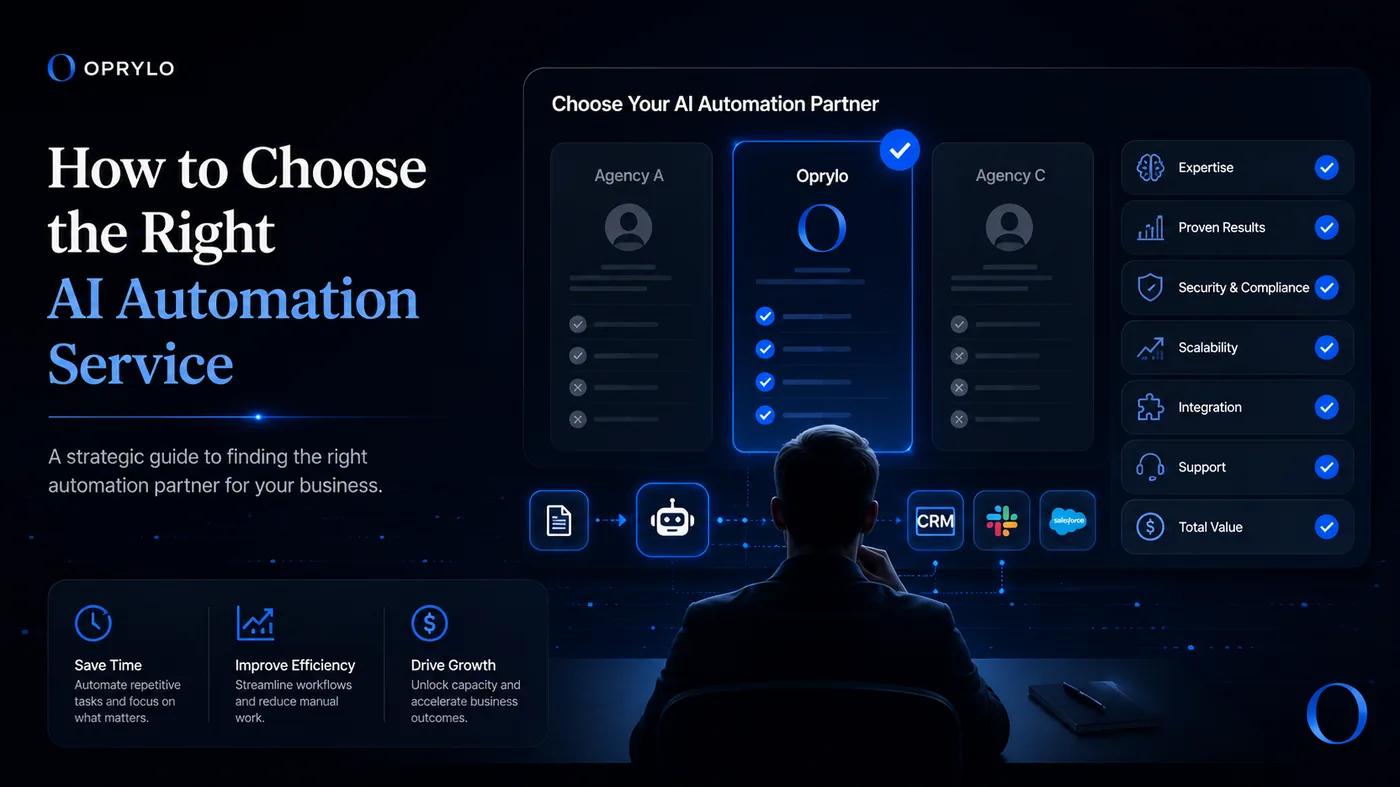
What to look for in an AI automation partner
- A clear discovery or audit process before quoting
- Experience with businesses similar in size and industry
- The ability to work with your existing tools, not replace them
- Documented workflows you actually own after delivery
- Ongoing support, automations break when tools update
- Straightforward pricing with a clear scope
- Willingness to say no when automation isn't the right fix
Questions worth asking before you hire
- What does your discovery process look like?
- Which of my current tools can you build on?
- Who owns the automations and accounts when we're done?
- What happens if a workflow breaks in three months?
- Can you show a similar workflow you've built before?
- How do you handle sensitive steps like pricing or refunds?
- What's realistic to expect in the first 30, 60, and 90 days?
Honest, specific answers are more valuable than polished pitches. A partner who talks openly about trade-offs is usually a partner who will still be useful six months in.
Red flags to watch for
- Vague promises about 'AI' without concrete workflow examples
- Guaranteed revenue numbers or unrealistic ROI claims
- Pressure to switch every tool you use to their preferred stack
- No written scope, or scope that keeps expanding without pricing
- Automations you don't own or can't access after the project ends
- No plan for maintenance once the build is done
Match the engagement to your stage
Not every business needs a full automation system on day one. The right shape of engagement depends on where you are:
You have one clear bottleneck
A focused build like a Starter Automation is usually the right move, fix the biggest leak first, then decide what's next.
You're losing leads or responding slowly
A Lead Flow System combines lead follow-up automation, CRM automation, and qualification into one connected workflow.
You're missing calls or messages
An AI Receptionist handles customer intake automation across calls and messages so nothing sits unanswered.
You're ready for a connected system
A Workflow Growth engagement ties intake, CRM, follow-up, reporting, and internal operations together, full business process automation with ongoing support.
How Oprylo scopes AI automation services
Every Oprylo engagement starts with a free automation audit. We look at how work moves through your business today, where time and revenue are leaking, and which workflows will have the biggest impact first. Only then do we recommend a scope, from the packages above or a custom automation partnership.
If you're comparing providers, the audit is also a useful benchmark, you can take the findings to anyone. If you want to talk it through first, get in touch.
The takeaway
The right AI automation service isn't the one with the flashiest demo, it's the one that takes time to understand your business, works with your existing tools, and is still around when you need changes six months later. Choose for the long game, and the workflows will keep paying off.